Affichage des articles dont le libellé est Dr Hassan Aydinli. Afficher tous les articles

jeudi 17 décembre 2015

Iraqi Turkmen representatives invited at the 6th European Parliament – Iraq Interparliamentary Meeting (VIDEO)

Iraqi Turkmen representatives invited at the 6th European Parliament – Iraq Interparliamentary Meeting (VIDEO)


Iraqi Turkmen representatives were invited at the 6th European Parliament – Iraq Interparliamentary Meeting  – on 3rd December 2015.
DSC_2072


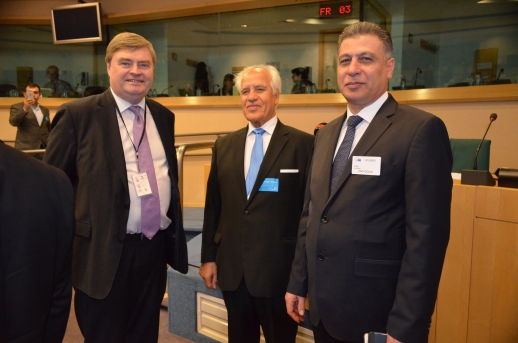
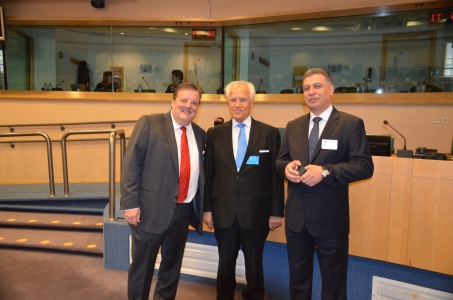
photo above: the Chair of the Delegation for relations with IRAQ, Mr. David Campbell Bannerman MEP – Iraqi Turkmen Front EU Representative Dr. Hassan Aydinli, and the President of Human Rights Commission at the Iraqi Parliament and ITF President, Mr. Arshad Salihi.
DSC_2077


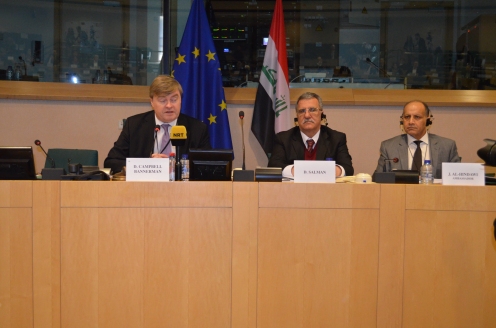
Introduction by the Chair of the Delegation for relations with IRAQ, Mr. David Campbell Bannerman MEP and by the Chair of the Iraqi Parliamentary Delegation, Mr. Dhafer Salman (see photo above) also on this photo H.E. the Ambassador of Iraq to the Kingdom of Belgium.
DSC_2078


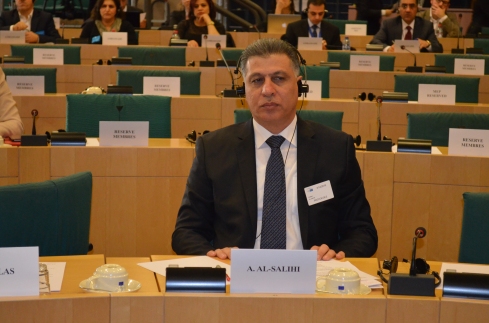
The President of Human Rights Commission at the Iraqi Parliament and ITF President Mr. Arshad Salihi
The recording of this event is available on:  our multidevice player.
For Mr. Arshad Salihi’s speech please see at 2:10

Key speakers :
Mr. Elmark Brok, AFET Chair and AFCO Member
Mr. Yousif Mohammad Sadiq, Speaker of the Iraqi Kurdistan Regional Parliament
Mr. John O’Rourke, Head of Division Arabian Peninsula, Iran and Iraq at the European External Action Service
Mr. Struan Stevenson, former Chairman of the EP Delegation for Relations with Iraq.
DSC_2074


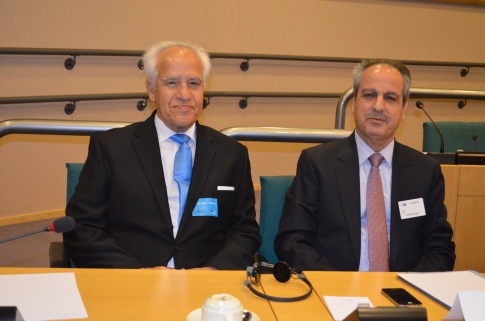
ITF EU representative Dr. Hassan Aydinli and Mr Ayden Hilmi Aksa, Foreign Relations Advisor Republic of IRAQ Council of Representatives.
DSC_2070


Mr. William Spencer, Intl. Institute for Law and Human Rights, Executive Director, Iraqi Turkmen Front EU representative Dr. Hassan Tawfiq Aydinli and the President of Human Rights Commission at the Iraqi Parliament and ITF President Mr. Arshad Salihi

please find the links to the web-streaming recording hereunder:
This event is also available on our multidevice player.


samedi 24 octobre 2015

Dr. Hassan Aydinli, ITF EU Representative and Mr. Niyazi Mimar Oğlu, Member of the Iraqi Council of Representatives at the European Parliament


Dr. Hassan Aydinli, Iraqi Turkmen Front EU Representative and Mr. Niyazi Mimar Oğlu, Member of the Iraqi Council of Representatives were invited as guest speakers at the Delegation for Relations with Iraq Meeting at the EU Parliament in Strasbourg.


Hereunder the official Minutes of the Meeting:

DELEGATION FOR RELATIONS WITH IRAQ MEETING AT THE EUROPEAN PARLIAMENT 

D-IQ_PV(2015)0610
MINUTES
of the meeting of 10 June 2015, 15.00-17.00
Strasbourg
The meeting opened at 15.00 on Wednesday, 10 June 2015, with David Campbell Bannerman (Chair) presiding.

1.         Chair’s announcements

Mr Brian Hayes (EPP - IRELAND), welcomed guest speakers from the Yazidi, Turkmen and Chaldean/Syriac/Assyrian communities in Iraq. He reminded the audience that the EU supports those actors who promote national reconciliation processes in Iraq, including Iraqi institutions promoting the creation of an inclusive Iraqi National Guard. In this regard, he announced that he recently met with the Speaker of the Iraqi Council of Representatives, Mr Al-Jabouri, at a joint AFET-DEVE meeting dedicated to the humanitarian response plan for Iraq. The outcome of this meeting was positive.

2.         Adoption of draft agenda (PE 553.741)

The agenda was adopted.

3.         Adoption of minutes of the Delegation meeting of 29 April 2015 (PE 553.735)

The minutes were adopted.

4.         Exchange of views with the Representatives of the 'Yazidi Democratic Movement' in Sinjar, created for the fight against Daesh:

Mr. Said Hassan, a representative of the 'Yazidi Democratic Movement', argued that the different peoples living under dictatorships in the MENA region were forced to protest against their respective regimes, a phenomenon commonly known as the Arab Spring. Unfortunately, this phenomenon, he explained, generated a situation in Iraq that threatens the survival of Iraqi minorities. Subsequently, he called upon EU institutions and the UN Security Council to focus on Iraqi minorities under risk of disappearing, particularly the Yazidi community.

In August 2014, DAESH killed thousands of Yazidi men in Sinjar. This massacre, among others, is part of DAESH' destruction of Iraqi heritage, an action that will result, in his opinion, in a major cultural loss. In this regard, he thanked the Kurdish people for helping the Yazidi community, which, he claimed, might face extinction. In order to avoid such extinction, a constituent assembly has been established to govern the Yazidi community in Mount Sinjar and the surrounding territories. Another governing body has been established outside of Iraq to support Yazidi efforts inside Iraqi territory, he explained.

Then, he argued that the Yazidi community has had to resort to the creation of its own forces, as Iraqi forces do not guarantee their security. In March 2015, the Yazidi community formed its own forces, which now operate in Sinjar. According to him, if they had had more weapons and military backup, they could have hired more people to fight against DAESH. He called upon the international community and the EU to support the Yazidi forces, as it is not acceptable to permit the extinction of ancient minorities such as the Yazidi community.

Mr. Nouri Mirza, a member of the 'Yazidi Democratic Movement', thanked the EU for inviting Yazidi representatives to speak about their current situation in Iraq. He argued that the international community is paying little attention to the Yazidi community, which is suffering DAESH' atrocities, among them the Sinjar massacre. As a board member of the Yazidi Democratic Movement, he stated that the conditions faced by the Yazidi community are severe. He explained how this community has been displaced through Iraq, Syria and Turkey. According to statistics, more than 5.000 Yazidi people have been kidnaped by DAESH; most of them women and children. Also, 11 massive graves have been found containing bodies of Yazidi people, and the holy places of this community have been destroyed by DAESH.

He then provided an example: in August and September 2014, DAESH militants in northern Iraq perpetrated a massacre in the village of Kocho, and abducted women and children. Before said event, there were 344 Yazidi families living in Kocho, that is 1738 Yazidi people. From this amount of people, over 450 were killed by DAESH militants.

He called upon the international community to help Yazidi refugees. He thanked the Iraqi Kurdistan for hosting the Yazidi community, which has been settled in camps. The conditions in these camps are not proper; he argued. Refugees lack access to medical health care, being diseases common. Also, over 10.000 people are hiding in the Sinjar Mountain receiving no help from the international community. They have no water, tents, weapons, nor clothing.


5.         Exchange of views with the representatives of minority communities in Iraq:

Mr David Campbell Bannerman (ECR-UK, Delegation Chair), resumed his role as Chair of the Delegation.

Dr. Hassan Tawfiq Aydinli, Iraqi Turkmen Front EU Representative, thanked the EU for inviting Iraqi representatives to speak for an EU audience. He focused his contribution on two of the main problems faced by Turkmen in Iraq. Turkmen have been twice internally displaced people: first under Saddam Hussein, and now under DAESH. This has led to the loss of property. Reclaiming this property is difficult. There is a Commission in charge of handling confiscations, properties and related topics. Nevertheless, due to administrative difficulties and the advance of DAESH, it has proven almost impossible for Turkmen to regain their property. The other problem is the following: 300.000 Shia people belonging to the Turkmen community have been forced to leave the community, as DAESH attacks the Shia community. Defending the Shia Turkmen community is causing the death of Turkmen, who receive no help from the Iraqi government nor the Peshmerga.

Mr. Niyazi  Mimar Oglu, a member Iraqi Council of Representatives who has been targeted 28 times, also thanked the EU for inviting Turkmen representatives to discuss the concerns of this community. This community, he explained, is composed of over 2 million people. It faces DAESH, and the differences between the government in Baghdad and that in the Kurdish region. Many people have been killed, and many others have been forced to flee. Others have been kidnapped.

The Turkmen believe in diplomacy, in formal negotiations, he argued. However, given the circumstances, the Turkmen have been forced to fight. The international community has ignored the difficulties faced by this community, he emphasised. Also, the rights of this community have been violated, and their territory -under the umbrella of the central government-, reduced.

He sought to obtain international support for the Turkmen community, and explained the need for stronger military action against DAESH. Also, he stated that, from the entire EU funding to Iraq, the Turkmen did not receive an euro.

Mr. David Campbell Bannerman (ECR-UK, Delegation Chair) thanked the Turkmen guests for travelling to EU and for their contributions. 


Above: with Mr. Brian HAYES, Fine Gael MEP for Dublin, Ireland.
Member of the European People's Party.


He then gave the floor to Assyrian representatives.

Mr. Sharbil Hanna Matty, General of the Assyrian "Nineveh Plain Forces", thanked the EU for the invitation to participate in the meeting. He referred to the Assyrian people as a Christian nation looking for co-existence in Iraq, partnership and equal rights. He thanked the Kurdistan region for hosting all types of refugees, and urged the EU to support the Kurdish government and to implement all the measures promised by the EU. They have received no military support. The Peshmerga is currently training Christian Assyrian forces, yet this is not enough. They need weapons; vehicles and clothing.

Furthermore, he stated that the Assyrian community seeks to become an independent administration within the Kurdistan region. Also, he expressed his support to other minorities and the willingness of the Assyrian community to work with other communities towards a common project, that is, a unified and democratic Iraq. In order to achieve this project, he explained, the support of the European Union is needed. The EU needs to be involved in the negotiations so that minorities are conceived of as equal partners, and so that displaced people feel like returning to their homes.


MPE Mr. Gérard Deprez (Group of the Alliance of Liberals and Democrats for Europe, Belgium) welcome the willingness of the different minorities to work together towards an end of the conflict. He then requested a clarification on whether these minorities are seeking any sort of political or territorial autonomy. Also, he noted that, despite the fact that all minorities feel part of Iraq, all the representatives thanked the Peshmerga or the Kurdistan region rather than the Iraqi forces or the central government. He asked what the Iraqi government could do for these minorities; and whether the Iraqi government can guarantee their security.

MPE Mr. Afzal Khan (Group of the Progressive Alliance of Socialists and Democrats in the European Parliament, United Kingdom) asked the representatives of these minorities about the emergence of DAESH.  Other MPE enquired about the deplorable situation in Kurdistan, and, in line to Mr. Khan's question, asked about the emergence and success of DAESH, which is seen as a protector of the Sunni people.

The representatives argued that their demand for autonomy was not new, but a demand that was formulated in 2004 following the fall of the Saddam regime. This autonomy is supported by the Iraqi constitution, they explained, and does not imply the division of Iraq, but the creation of autonomies within Iraq. The representatives of these minorities argued that minorities look forward to have their own administrations and to achieve equality, and that they support each other in their aspirations. They also asserted that, when it comes to autonomy, all the difficulties faced by the different communities in Iraq are rooted in the creation of Iraq following World War I. They argued that if one part of Iraq is allowed to have its own autonomy, so do other parts.

Furthermore, they argued that the Iraqi government does not have the capacity to rule the country, and that minorities do not receive help from the central government. These minorities are settled between DAESH and the Kurdish region. Consequently, following the fall of the Saddam regime, the Kurdish region became the ally of these minorities, who ask for equal access to help.

In regard to the emergence of DAESH, they argued that it is an organisation that rose in a space where it could expand itself. Also, there is a theory that DAESH has been created in order to design a new Middle East map. Anyway, they argued, the different parties in Iraq were not able to coordinate themselves, particularly with the Iraqi government, making it difficult to act cohesively against DAESH. Moreover, they underlined that people joining DAESH do so because they have not been able to find a place within their respective countries, from Saddam's former military heads in Iraq to European militants joining the ranks of DAESH.

Finally, the called upon the EU to support internally displaced people as well as the reconstruction of Iraq. They called for resolutions to be implemented. They argued that people is losing hope in the international community.

A representative from the Iraqi Embassy argued that Iraq is a democratic country, since all minorities do have representatives in the central government. He argued that these representatives should express their concerns to their elected members of parliament. Iraq has financial issues, and this has to be taken into consideration.

6.         Any other business

None.

7.         Date and place of next meeting


The meeting closed at 17.00.

The following MEPS attended the meeting:
David Campbell Bannerman, Brian Hayes, Javier Couso Permuy, Joëlle Bergeron, Gérard Deprez, Ana Gomes, Michel Reimon, Afzal Khan, Branislav Škripek, György Hölvényi, Bas Belder

jeudi 2 juillet 2015

Dr. Hassan Aydinli, ITF EU representative received an invitation from MEP Josef Weidenholzer to participate to the Conference on Human Rights in Iraq at the EU Parliament

Dr. Hassan Aydinli, Iraqi Turkmen Front EU representative was invited as speaker at the Conference on Human Rights and religious minorities in Iraq, which was hosted by MEP Josef Weidenholzer  at the European Parliament on 29th - 30th June and 1st July 2015. 


MEP Josef Weidenholzer, Chairman of the Conference and Dr. Hassan Aydinli, Iraqi Turkmen Front EU representative.

Were present at the conference opening:
H.E. Dr. Jawad Al-Chlaihawi, Designated Ambassador of Iraq in Belgium
Delavar Ajgely, Head of the Mission to European Union, KRG
Breen Tahseen,  Yazidi representative of the 'Mir' family, Iraqi Diplomat

Several Members of the European Parliament participated at the Conference.
Marietje Schaake (ALDE), Ana Gomes (S&D), Cornelia Ernst (GUE), Michèle Alliot-Marie Former State Minister (France), Ismail Ertug, Engel Frank,  Freund Eugen, Afzal Khan, Barabara Lochbihler, Martin Edouard, Piri Kali, Reimon Michel, Terricabras Josep-Maria, Zaborska Anna.
Alessia Corsini, European Commission
Thomas Schmidinger, Humanitarian Organisation LeEZA, University Vienna


Participants :
Hassan Aydinli, Iraqi Turkmen Front EU representative
Jamil Suleiman Haydar, Former Minister of Agriculture and Water Resources Iraq
Mirza Dinnayi, Head of "Air Bridge" Iraq & KRG Advisor for Disputed Areas in Iraq
Yonadam Yawsep Kanna, Iraqi Parliament, Assyrian Democratic Movement (ZOWAA)
Yousuf Muharam Salman, Shabak Democratic Gathering in Europe, Iraqi Minorities Council
Hasan Nagham, Gynaecologist and volunteer aid worker for an NGO in Iraq
Emanuel Youkhana, Archimandrite, Head of CAPNI (Christian Aid Program Northern Iraq)
Mato Naif, Mayor Kojo (village massacred by IS)
Salam Farhan, Director of Mandaean Human Rights Group
Hayder Shesho, HPS (Shingal's protection units)
Mamou Farhan Othman, Director of the European Studies Centre, Univesity of Duhok
Leyla Ferman, Co-President of the Yezidi Federation of Europe
Diya Butrus Sulaywa, Head of Independant Commission for Human Rights, Kurdistan
Naher Arslan, Assyrian Institute of Belgium
Lokman Khalil, Shabak, Netherlands
Goran Alkakay, Kakai-Intellectual, Nineveh Plains
Shuhaib G. Nashi, Mandaen Association Union, Morristown, NJ
Hagop Simonian, Armenian Community Arbil


Dr. Hassan Aydinli  spoke on the Political and Humanitarian Situation of Turkmens


The panel was chaired by Michiel Leezenberg, University Amsterdam


Dr. Hassan Aydinli speaking with Michèle Alliot-Marie, MEP, Former State Minister, Head of the Parliamentary Working Group 'Christians in the Middle East", France.


The conference was followed by 'Working Groups' during which the participants had a chance to discuss the following questions in smaller groups:
1. Which political solutions are there for the minorities in Iraq that are threatened by IS and other militias?
2. What can the European Union do to support such solutions?
3. Which humanitarian measures would you ask from the EU?


Dr. Hassan Aydinli with MEP Josef Weidenholzer


A Joint Press Meeting took place in the Glassroom at the EP on 1st July 2015.

Moderations and Introduction : MEP Josef Weidenholzer.
participants: 
Mirza Dinnayi, Head of "Air Bridge" Iraq & KRG Advisor for Disputed Areas in Iraq
Hassan Aydinli, Iraqi Turkmen Front EU representative
Yonadam Yawsep Kanna, Iraqi Parliament, Assyrian Democratic Movement (ZOWAA)
Yousuf Muharam Salman, Shabak Democratic Gathering in Europe, Iraqi Minorities Council
Hasan Nagham, Gynaecologist and volunteer aid worker for an NGO in Iraq
Emanuel Youkhana, Archimandrite, Head of CAPNI (Christian Aid Program Northern Iraq)
Mato Naif, Mayor Kojo (village massacred by IS)
Salam Farhan, Director of Mandaean Human Rights Group


This is the second time Dr. Hassan Aydinli, ITF EU representative was invited at the EU Parliament this month to speak about the Turkmens of Iraq, please see:
Two Iraqi Turkmen representatives, were invited as guest speakers at the EU Parliament in Strasbourg, at the Delegation for Relations with Iraq Meeting on 10th June 2015

http://turkmenfriendship.blogspot.be/2015/07/dr-hassan-aydinli-iraqi-turkmen-front.html


mercredi 1 juillet 2015

Dr. Hassan Aydinli, Iraqi Turkmen Front EU Representative and Mr. Niyazi Mimar Oğlu, Turkmen Member of the Iraqi Parliament were invited as guest speakers at the European Parliament


Dr. Hassan Aydinli, Iraqi Turkmen Front EU Representative and Mr. Niyazi Mimar Oğlu, Turkmen Member of the Iraqi Parliament were invited as guest speakers at the Delegation for Relations with Iraq Meeting at the European Parliament in Strasbourg, France on 10th June 2015.


Niyazi MIMAR OĞLU, Turkmen Member of the Iraqi Parliament.
Dr.Hassan Aydinli, ITF EU Representative
in Front of the EU Parliament in Strasbourg, France.


From left to right: Brian HAYES, Vice-Chairman Delegation for relations with Iraq
David CAMPBELL BANNERMAN, Chairman of Delegation for relations with Iraq
Niyazi MIMAR OĞLU, Turkmen Member of the Iraqi Parliament 
Dr. Hassan AYDINLI, Iraqi Turkmen Front EU representative


From left to right: Brian HAYES, Vice-Chairman Delegation for relations with Iraq
David CAMPBELL BANNERMAN, Chairman of Delegation for relations with Iraq
Niyazi MIMAR OĞLU, Turkmen Member of the Iraqi Parliament 
Dr. Hassan AYDINLI, Iraqi Turkmen Front EU representative


Brian HAYES, Vice-Chairman of the Delegation for relations with Iraq 
Dr.Hassan AYDINLI, Iraqi Turkmen Front EU representative
Niyazi MIMAR OĞLU, Turkmen Member of the Iraqi Parliament


From left to right: Branislav Skripek MEP.
Dr.Hassan Aydinli, ITF EU Representative.
David Campbell Bannerman, Chairman of the Delegation for relations with Iraq.
Niyazi MIMAR OĞLU, Turkmen Member of the Iraqi Parliament.
Javier Couso Permuy, Vice-Chairman of the Delegation for relations with Iraq
Afzal Khan, Member of the European Parliament


Dr. Hassan Aydinli, ITF EU Representative speaking to
Gérard Duprez, Member of the European Parliament


Javier Couso Permuy, Vice-Chairman of the Delegation for relations with Iraq
David Campbell Bannerman, Chairman of the Delegation for relations with Iraq.
Niyazi MIMAR OĞLU, Turkmen Member of the Iraqi Parliament.
Dr.Hassan Aydinli, ITF EU Representative


Rok KOZELJ, EU Parliament Directorate General External Policies
Brian HAYES, Vice-Chairman of the Delegation for relations with Iraq 
David Campbell Bannerman, Chairman of the Delegation for relations with Iraq.
Niyazi MIMAR OĞLU, Turkmen Member of the Iraqi Parliament.
Dr.Hassan Aydinli, ITF EU Representative


Several MEPs attending the conference put questions to
the guest speakers
from left to right MEPs Bas Belder, Branislav Skripek, Afzal Khan.


Representative of the Iraqi Embassy Brussels and Members of the EU Parliament and representatives of EEAS and ADLE attended the conference.
MEPs Michel Reimon, Ana Gomes, Gérard Deprez, J. Bergeron,
Branislave Skripek, Bas Belder, Afzal Khan.


Branislav Skripek, Member of the European Parliament
Dr. Hassan Aydinli, Iraqi Turkmen Front EU representative


Dr. Hassan Aydinli, Iraqi Turkmen Front EU representative
Afzal Khan, MEP


Afzal Khan, MEP, Dr. Hassan Aydinli ITF EU representative
Niyazi MIMAR OĞLU, Turkmen Member of the Iraqi Parliament.


Niyazi MIMAR OĞLU, Turkmen Member of the Iraqi Parliament.
Dr.Hassan Aydinli, ITF EU Representative
in Front of the Council of Europe in Strasbourg, France.


Niyazi MIMAR OĞLU, Turkmen Member of the Iraqi Parliament.
Dr.Hassan Aydinli, ITF EU Representative
in Front of the EU Parliament in Strasbourg, France.

vendredi 27 mars 2015

REPORT: THE TRAGEDY OF THE TURKMENS OF BEŞİR (BASHEER) IN KIRKUK PROVINCE - IRAQ

FOR THE ATTENTION OF THE HONOURABLE MEMBERS OF THE DELEGATION FOR RELATIONS WITH IRAQ IN THE EUROPEAN PARLIAMENT.


THE TRAGEDY  OF THE TURKMENS OF BEŞİR (BASHEER) IN KIRKUK PROVINCE - IRAQ
TWO GENOCIDES  HAVE BEEN COMMITTED AGAINST THEM IN THE PAST 28 YEARS 
            THE FIRST ONE IN APRIL 1986 AND THE SECOND ONE IN JUNE 2014.
By Dr. Hassan Aydinli,
Iraqi Turkmen Front EU Representative
Brussels, 25th March 2015.

 Notes:
1- Above is a map where the sub-district of BEŞIR (Basheer or Bashir in Arabic) is indicated.
2-The area in green on the map is where the Turkmens have settled in Iraq 1000 years ago.
BEŞIR (Basheer) is the name of a large Turkmen agricultural sub-district situated 25 km south west of Kirkuk whose name has become famous as a symbol of the Turkmens’ sufferings in Iraq after it was mentioned in the Preamble of the new Iraqi Constitution in 2005, along with the names of the Arab sub-district Al-Dujail and of the Kurdish sub-district Halabja, whose populations have suffered the most in Iraq under the dictatorship of Saddam Hussein.
Indeed, the ordeals of the Turkmens of BEŞIR (Basheer) under the dictatorship of Saddam Hussein from 1980 up to 2003 have been acknowledged by the legislators and the authors of the new Iraqi constitution as ‘crimes of ethnic cleansing, racial oppression and massacres amounting to genocide, committed against the Turkmens of Basheer’.
 HISTORY:
The history of BEŞIR as a Turkmen agricultural settlement in the north of Iraq goes back to more than 1000 years and its first recorded history goes back to 1556, it is mentioned in the Ottoman registers (Dafter Tahrir of Kirkuk N° 111 of the year 1556 AC) dating back to the reign of the Ottoman Sultan Suleiman the Magnificent and kept in the Turkish Archives in Ankara.
According to these registers there were 89 Turkmen families and 9 bachelors living in BEŞIR in 1556, all of them farmers who had been issued official deeds (certificates) registered in their names.
After WWI, when the new Iraqi state (the Kingdom of Iraq) was established the deeds and property certificates issued during the Ottoman era were renewed in 1936 and registered as deeds being issued by the Iraqi state.
The property ownership situation in Iraq remained unchanged until 14th July 1958 when the Monarchy was overthrown by a coup d’état and the Republic of Iraq was declared.
First genocide: Land confiscation, ethnic cleansing and racial discrimination
During the early years of the Republic the Iraqi Communist Party and their Kurdish leftist allies became predominant and they influenced the political and social orientation of the regime. The government issued many new laws, among them the ‘agrarian law’ which limited the land ownership to a maximum of 2.000 donums (500 hectares) per family.
Many hectares of land were taken from Turkmen families in BEŞIR to be distributed to landless Iraqis such as the Arab nomads and poor Kurds, to help them to settle around BEŞIR.
Furthermore in 1968, when the Baath party came to power in Iraq by a military coup, it embarked in a policy of arabization of the Turkmen region in Kirkuk Province, they issued new laws limiting the property ownership to 200 donums (50 hectares) per family (law number 117 of 1970) and more agricultural lands belonging to the Turkmen families living in BEŞIR and in the other Turkmen villages around Kirkuk were confiscated.
From 1970 to 1980 the Revolutionary Command Council of the Baath regime issued several decisions by which they confiscated lands belonging to Turkmens, supposedly for the purpose of general public interest (protection of oil fields, enlargement of the military installations, new air base, etc.), i.e. Decision Number 369 of 1975, Decision Number 824 of 1976, Decision Number 949 of 1977, Decision 1065 of 1978 etc... This is how 1.300.000 Donums (325.000 hectares) of agricultural land belonging to Turkmens of Kirkuk were confiscated (as indicated in the letter from the Judicial Adviser of the Ministry of Agriculture in Kirkuk to the Minister of Agriculture Ref 16784 dated 25/11/2010).
All these confiscated Turkmen lands have been registered as ‘lands belonging to the Iraqi state’ in the names of:  the Ministry of Finance or the Ministry of Local Administration.
In 1982 after the start of the Iraq-Iran war, and despite the enrolment of several hundreds of Turkmens from BEŞIR in the army to fight against the Iranians, the Iraqi security forces arrested hundreds of intellectuals from BEŞIR, accusing them of being opponents to the Baath party and affiliated to the forbidden Al-Dawa Party (Shi’a).
In 1984, after summary judgements by a revolutionary court,  93 intellectuals of BEŞIR were sentenced to capital punishment and were hanged  and 71 were sentenced to life imprisonment in Abu Ghraib prison, among them young boys  aged 16 and elderly men over 60.
In 1986 while the young men of BEŞIR, were still fighting on the front in the war against Iran, the Baath regime, not satisfied with the above mentioned unjust punishments of innocent Turkmens of BEŞIR, ordered the expulsion of their families, giving them 48 hours to pack their personal effects and leave their homes. They were forcibly moved to some communal compounds which had been built in a rush to serve as ‘transitional accommodation’ on the road to Tikrit. Their houses were razed to the ground and their agricultural lands were confiscated and were given to Sunni Arabs supporting the Baath regime, in application of a policy designed to arabize Turkmen towns and villages in Kirkuk province.
Each of these Arab families were given 10.000 Iraqi Dinars in cash (equivalent of 33.000 USD) as incentive to build their house on Turkmen lands, while the unfortunate Turkmens were displaced without any valid reason or any legal justification and without receiving any compensation.
After a year spent in the communal compounds the Turkmen families from BEŞIR were dispersed to cities throughout Iraq: Nasseriyah, Diyala, Diwania, Kut and Erbil, without being provided with housing and without being compensated for the loss of their livelihoods, houses and agricultural lands.
From being landowners and farmers since centuries in Iraq, the Turkmens of BEŞIR became refugees in their own country and were left completely destitute.
Meanwhile the Baath regime had arabized the name of the village calling it “Al-Bashir” instead of BEŞIR.
After the regime change in April 2003, when the U.S. military occupied the north of Iraq they did not take control of the area around BEŞIR and the Arabs which had been installed there by the Baath regime remained in the area.  The original Turkmen inhabitants of BEŞIR came with tents and camped near the village, demanding the departure of the Arab settlers, they wanted to recuperate their agricultural lands and be compensated for the loss of their properties and loss of earnings since 1986.
A Turkmen NGO built 100 houses for the families of the martyrs, which became the nucleus of the new reconstructed sub-district of BEŞIR and little by little other Turkmen families returned and built their houses there.
In July 2003 the newly returned Turkmens from BEŞIR wanted to remove the Arab settlers by force, the U.S. occupation authorities intervened, they led and controlled a “mediation” in September 2003, but this mediation did not resolve the property dispute, it was only a ‘short-term agreement’ which allowed the Arabs who had settled in BEŞIR to stay on the land for the Winter agricultural season on a ‘non-renewable basis’, it granted them the Winter harvest. The requirement was that they would leave BEŞIR within one year of the signing of the ‘agreement’. After this one year period the Turkmens would be allowed to return on their ancestral lands.
Unfortunately, the Arab settlers did not respect this ‘agreement’ and they refused to leave BEŞIR, despite the new Iraqi government’s offer to give them a sum of money to help them return to the region they came from. To make things worse, they built more and more houses on Turkmen lands.
On 15th January 2004, the Coalition Provisional Authority issued Regulation Number 8, authorizing the Governing Council of Iraq to establish the Iraqi Property Claims Commission. Soon after its creation, the Commission created Tribunals to look at the claims presented by the Iraqis who had been unjustly dispossessed.
The Turkmens of BEŞIR followed the procedures set up by the Commission and in early 2005 they introduced 1.150 claims to the Tribunals set up by the Property Claims Commission in Kirkuk for their confiscated agricultural lands situated in BEŞIR which had been registered in their names in the official old Cadastral Sector of BEŞIR (Sector numbers 36, 38, 45, 46, 47 and 48).
In July 2005 the Tribunals examined these 1.150 claims introduced by the Turkmens of BEŞIR, they found them receivable and justified and they ordered the return of all the agricultural lands to their original owners.
Notwithstanding the decisions of the Tribunals being in favour of the Turkmens of BEŞIR, only 350 of the 1.150 claims have been finalized to-date. This shows that the discrimination against the Turkmens continues in Iraq, despite the regime change and despite a special decree (number 59 / 2088) on 3rd October 2005 from the President of the Republic ordering the central and local authorities in Iraq to execute the decisions of the Tribunals of the Property Claims Commission swiftly and without any further delay.
Regrettably, the Iraqi Ministers of Finance and of Local Administration, under the pressure of the Sunni Arab political parties, have appealed the decisions of the Tribunals for the remaining 800 claims,  arguing that they need these lands supposedly ‘for general public interest’. Consequently, the cases are still pending and the Arab settlers are still living around BEŞIR and exploiting Turkmen agricultural lands.
In 2006, under the government of Prime Minister Ibrahim Al-Jaafary, the actual Prime Minister, Dr. Haidar Al-Ibadi, who was his adviser and was nominated the President of a Committee to investigate the Crimes committed against the people of BEŞIR (under the Baath regime) had asked (on 5th February 2006 in a letter ref.MRW/12/2006) the Governor of Kirkuk, Abdurrahman Mustafa, to update him about the progress of the local authorities of Kirkuk in helping the people of  BEŞIR  to recuperate their lands and to return to their homes.  He asked the Governor to send him a report about the problems still faced by the people of BEŞIR.
On 30th March 2006, the Iraqi Council of Ministers decided to reconstruct the sub-district of BEŞIR and it allocated 43 Billion Iraqi Dinars (about 32 Million USD) for this project and ordered the Finance Ministry (in a letter dated 2nd April 2006 ref. 8/1/5/4423) to allocate 14 Billion Iraqi Dinars to the Ministry of Reconstruction and Housing for the year 2006 to start the reconstruction.
Today, twelve years after the removal of the Baath regime and nine years after the decision of the Iraqi Council of Minister to reconstruct Bashir and despite the budget allocated in 2006 for its reconstruction, not a single house has been built by the Iraqi Government for the Turkmens of BEŞIR, the only realization by the Iraqi Ministry of Reconstruction and Housing and by the Governorate of Kirkuk is a publicity board at the entrance of Taza (near BEŞIR) announcing the ‘Project for the Reconstruction of BEŞIR’.
Second genocide: mass killings, rapes, ethnic cleansing and looting by ISIS terrorist groups
To make things worse for the Turkmens of BEŞIR, the Arab settlers who remained around BEŞIR welcomed the ISIS terrorists when these came to area and they supported them in the attacks on BEŞIR which started on 14th June 2014. BEŞIR inhabitants resisted ISIS attack during 3 days with their small weapons and only little ammunition. Unfortunately, because they did not get any help from the Iraqi forces or from the Kurdish peshmerga, they could not stop the invasion and occupation of BEŞIR by ISIS terrorists.
ISIS occupied BEŞIR on 17th June 2014 and expulsed its entire Turkmen population composed of about 1.500 families, totalising about 10.000 people. ISIS terrorists looted all the homes and properties.  A few days after they had occupied BEŞIR, they published some videos on their websites, showing the demolition of schools, offices, mosques, religious shrines and the library. To terrorize and humiliate the Turkmens, ISIS published photos of their unfortunate victims, some had been beheaded and their bodies had been left in the open to be eaten by wild animals, and some others had been tied to lamp posts.
ISIS has committed war crimes and ethnic cleansing in BEŞIR. During the first three days of their attack they killed 36 unarmed Turkmens. They kidnapped women and children, tortured, raped and savagely killed some of them.

A few days after the occupation of BEŞIR, a group of Turkmen volunteers composed of youths from other Turkmen localities (Taza, Tisin, Tuz Khurmatu and Kirkuk) came to help the people of BEŞIR, together they tried to dislodge ISIS terrorists. Unfortunately they failed, 21 were killed and many of them were injured by ISIS snipers positioned in strategic points in and around BEŞIR, armed with heavy long range machine guns. Their task was made difficult because ISIS had already planted explosive devices on the roads leading to BEŞIR and booby trapped buildings and houses in BEŞIR.
On 18th March 2015, a Turkmen unit of the ‘Peoples’ Mobilisation to fight against ISIS’ (Hashd al-Shaabi) tried again to liberate BEŞIR, unfortunately they too failed,  because ISIS terrorists had time to reinforce their positions in and around BEŞIR, positioning many more snipers with long range machine guns in all the strategic high positions. The Turkmen unit managed to reach the Police Station but they were forced to withdraw after suffering many casualties (5 killed and 9 gravely injured).
It is clear that the Turkmen unit of the ‘Peoples’ Mobilisation to fight against ISIS’ with its present day capacity and weapons cannot liberate BEŞIR without reinforcement and support from the Iraqi and/or International Coalition air forces. Unfortunately, to-date, neither has come to their help.
During the 23rd March 2015 Meeting of the Iraqi Council of Ministers in Baghdad, it has been decided that the peoples who have suffered from ISIS terrorist attacks in the north of Iraq, i.e. the Christians, the Turkmens, the Yezidis, the Kurds and the Shabaks, exposing them to mass killings and to internally displacement, are victims of ethnic cleansing, amounting to genocides. Concerning the Turkmens, the Council of Ministers has specified that the Turkmens of TEL AFAR and the Turkmens of BEŞIR, have been victims of genocide by ISIS terrorist groups.
Thus, this is the second genocide committed against the Turkmens of BEŞIR in less than 28 years.
Therefore, we Turkmens of Iraq, call upon the Delegation for Relations with Iraq of the EU Parliament, to support our case and endorse the Turkmen demands stated in the Common Declaration of the indigenous non-ruling peoples of Iraq, (which we presented to the EU Parliament on 19th November 2014) and advocate our requests with the European Parliament, the EEAS, the European Commission and the EU Council.
The Iraqi Turkmens request the following help and support from the European Union authorities:
  • Provide humanitarian aid directly to the remaining 250.000 displaced Turkmens.
  • Provide military training and military equipment directly to the Turkmen units in order to enable them to liberate the sub-district of BEŞIR, the district of TEL AFER and the Turkmen villages around MOSUL which are still occupied by ISIS.
  • Provide material aid to rebuild the homes, properties and infrastructure damaged or destroyed by ISIS terrorist groups in the Turkmen region after it has been liberated.
  • Assist and support the Turkmens in their negotiations with the Iraqi Central Government and the KRG concerning their request for TEL AFAR and TUZHUMATU to be upgraded to the status of Governorates in Iraq.
  • Assist and support the Turkmens in their negotiations with the Iraqi Central Government and the KRG in order to achieve a special status for Kirkuk, whereby the power will be shared equally between the Turkmens, Arabs and Kurds (32% for each of the three main ethnic communities and 4% for the Christian minority of Kirkuk).
  • Assist the Turkmens in their negotiations with the Iraqi Central Government to obtain their fair share of power within the Central Government and their fair share from the Iraqi budget.
Thank you for your understanding and support.