Iraq: Security Forces Abusing Women in Detention
Torture Allegations Underscore Urgent Need for Criminal Justice Reform
FEBRUARY 6, 2014
What Iraq Should Do
Investigate alleged abuse of women in detention
Prosecute those found responsible for abusing detained women
Repeal provisions that allow arrests based on secret testimony and coerced confessions
What Other Governments Should Do
Condition aid to Iraq, especially weapons and security assistance, on compliance with treaty obligations
Enlarge
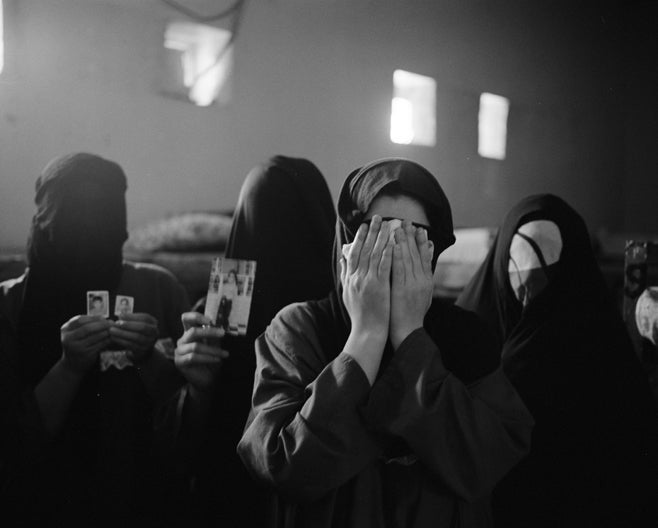
Women incarcerated in the Kadhimiyya women’s prison in 2006. Prior to 2009, Kadhimiyya was the only place in Baghdad where women charged with crimes were incarcerated. Security forces now detain women in prisons and other detention facilities across the country; many remain in detention for months and even years without trial.
© 2006 Yuri Kozyrev / Noor /Redux
OUR REPORT:

“No One is Safe”
The Abuse of Women in Iraq’s Criminal Justice System
FEBRUARY 6, 2014
GET THE REPORT:
 Download the full report
GO TO REPORT HOME »
(Baghdad) – Iraqi authorities are detaining thousands of Iraqi women illegally and subjecting many to torture and ill-treatment, including the threat of sexual abuse. Iraq’s weak judiciary, plagued by corruption, frequently bases convictions on coerced confessions, and trial proceedings fall far short of international standards. Many women were detained for months or even years without charge before seeing a judge.
The 105-page report, “‘No One Is Safe’: Abuses of Women in Iraq’s Criminal Justice System,”documents abuses of women in detention based on interviews with women and girls, Sunni and Shia, in prison; their families and lawyers; and medical service providers in the prisons at a time of escalating violence involving security forces and armed groups. Human Rights Watch also reviewed court documents and extensive information received in meetings with Iraqi authorities including Justice, Interior, Defense, and Human Rights ministry officials, and two deputy prime ministers.
“Iraqi security forces and officials act as if brutally abusing women will make the country safer,” said Joe Stork, deputy Middle East and North Africa director at Human Rights Watch. “In fact, these women and their relatives have told us that as long as security forces abuse people with impunity, we can only expect security conditions to worsen.”
In January 2013, Prime Minister Nuri al-Maliki promised to reform the criminal justice system, beginning with releasing detained women who had judicial orders of release. A year later, the brutal tactics of security forces remain essentially the same and hundreds of women remain in detention illegally.
As fighting raged between a multitude of Sunni insurgent groups and government security forces in Anbar province in January 2014, Anbar residents expressed their frustration to Human Rights Watch over Maliki’s failure to carry out promised reforms. Residents’ lack of trust in security forces, caused by their policy of attacking residents in Sunni areas, including the abuses of women Human Rights Watch documented, is undermining the government’s military efforts against Al-Qaeda in Anbar, they said.
Many of the 27 women who spoke with Human Rights Watch described being beaten, kicked, slapped, hung upside-down and beaten on their feet (falaqa), given electric shocks, and raped or threatened with sexual assault by security forces during their interrogation. They said security forces questioned them about their male relatives’ activities rather than crimes in which they themselves were implicated. Security forces forced them to sign statements, many with fingerprints, which they were not allowed to read and that they later repudiated in court, they said.
One woman entered her meeting with Human Rights Watch in Iraq’s death row facility in Baghdad’s Kadhimiyya neighborhood on crutches. She said nine days of beatings, electric shocks, and falaqa in March 2012 had left her permanently disabled. The split nose, back scars, and burns on her breast that Human Rights Watch observed were consistent with the abuse she alleged. She was executed in September 2013, seven months after Human Rights Watch interviewed her, despite lower court rulings that dismissed charges against her following a medical report that supported her alleged torture.
Human Rights Watch found that Iraqi security forces regularly arrest women illegally and commit other due process violations against women at every stage of the justice system. Women are subjected to threats of, or actual, sexual assault, sometimes in front of husbands, brothers, and children. Failure by the courts to investigate allegations of abuse and hold the abusers responsible encourages the police to falsify confessions and use torture, Human Rights Watch said.
The vast majority of the more than 4,200 women detained in Interior and Defense ministry facilities are Sunni, but the abuses Human Rights Watch documents affect women of all sects and classes throughout Iraqi society.
Both men and women suffer from the severe flaws of the criminal justice system. But women suffer a double burden due to their second-class status in Iraqi society. Human Rights Watch found that women are frequently targeted not only for crimes they themselves are said to have committed, but to harass male family or members of their communities. Once they have been detained, and even if they are released unharmed, women are frequently stigmatized by their family or community, who perceive them to have been dishonored.
Iraq’s broken criminal justice system fails to achieve justice for victims either of security force abuses or of criminal attacks by armed groups, Human Rights Watch said. Arrests and convictions Human Rights Watch documented appeared often to have been predicated on information provided by secret informants and confessions coerced under torture.
“We don’t know who we fear more, Al-Qaeda or SWAT,” said one Fallujah resident, referring to the special forces unit that carries out counterterrorism operations. “Why would we help them fight Al-Qaeda when they’ll just come for us as soon as they’re done with them?”
Human Rights Watch reviewed a video in which a man representing himself as a leader of Al-Qaeda asks a crowd of onlookers in Ramadi, “What are we supposed to do when the army is raping our women? What are we supposed to do when they’re imprisoning our women and children?” Peaceful protesters posed these same questions to Iraqi authorities in mass demonstrations that began over a year ago, but Maliki’s promises to address these issues remain unfulfilled.
Women detainees, their families, and lawyers told Human Rights Watch that security forces conduct random and mass arrests of women that amount to collective punishment for alleged terrorist activities by male family members. Authorities have exploited vague provisions in the Anti-Terrorism Law of 2005 to settle personal or political scores – detaining, charging, and trying women based on their association to a particular individual, tribe, or sect, Human Rights Watch said.
In the vast majority of cases Human Rights Watch examined, women had no access to a lawyer before or during their interrogation, contrary to Iraqi law when security forces presented them with statements to sign, or at trial, either because they could not afford one or because lawyers feared taking on politically sensitive cases.
In every case Human Rights Watch documented in which women told the investigating or trial judge about abuse, the judges did not open an inquiry. Some dismissed the allegations, saying that they observed no marks on the defendant’s body or that the woman should have made the allegations earlier.
Iraqi authorities should acknowledge the prevalence of abuse of female detainees, promptly investigate allegations of torture and ill-treatment, prosecute guards and interrogators responsible for abuse, and disallow coerced confessions, Human Rights Watch said. They should make judicial and security sector reform an urgent priority as a prerequisite for stemming violence that increasingly threatens the country’s stability.
“The abuses of women we documented are in many ways at the heart of the current crisis in Iraq,” Stork said. “These abuses have caused a deep-seated anger and lack of trust between Iraq’s diverse communities and security forces, and all Iraqis are paying the price.”

.JPG)
.JPG)
.JPG)
+Kerkuk.JPG)
.JPG)
+Kerkuk.JPG)
