*

*

Prof. Dr. Etibar A. Najafov, Head Adviser, Service of the State Counsellor of the Republic of Azerbaijan for Multiculturalism, Interethnic and Religious Affaires - Dr. Hassan Aydinli, ITF EU Representative - Mr. Ayhan Demirci, Azerbaijan-Belgium Friendship Association.

.
The conference was hosted by MEP György Schöpflin
The conference was organized by Mr. Willy Fautré, Director of Human Rights Without Frontiers who presented the fact-finding mission report about 15 ethnic groups in Azerbaijan.
Dr. Mark Barwick of HRWF made a welcoming speech and introduced the representatives of the Russian and Greek ethnic groups: Russia representative Ms Yelena Voronina and Greek representative Ms Saida Mehdiyeva.
.
.
Mr. Willy Fautré, Director of Human Rights Without Frontiers (HRWF) based in Brussels presented the report he has recently published: AZERBAIJAN - Ethnic Diversity - Peaceful Co-existence and State Management.
.
The study addresses the issue of the co-existence of ethnic minorities in Azerbaijan and the management of diversity by the state. It highlights the specificities of a number of minorities and their historical roots, as well as the concerns of the state, which is still in the process of creating a new identity from the ashes of the former Soviet Union and which, due to recent experience, is also concerned about its territorial integrity.
.
.
The challenges were and are still huge: the identification of ethnic minorities in the light of the self-identification of their members, the accommodation of collective rights, social integration while respecting diversity and security.
.
In the absence of a clear definition of basic terms such as "national minority" or "ethnic minority", the number of ethnic and foreign groups that are present in any given country is virtually impossible to define. Concerning Azerbaijan, the figures vary from 60 to 80, depending on the sources and the actors met by Human Rights Without Frontiers on the occasion of several trips to Azerbaijan.
.
.
To be a member of a minority is never easy and to accommodate the claims of minorities is often a difficult exercise for any state.
.
.
On the one hand, minorities would like their identity, their culture, their folklore, their language or their religion to be preserved and developed. However, some of these markers risk getting diluted by mixed marriages and school education in the official language. They can disappear from one generation to the next. Members of minorities want to be fully integrated in society, but they do not want to be entirely assimilated.
.
On the other hand, states often perceive demands for more collective rights, for more autonomy, for constitutional and political changes with suspicion and as a possible threat to their territorial integrity in the future.
.
.
Both of these trends are perceptible in Azerbaijan.
.
.
Mr. Willy Fautré said that there may be lessons to learn from Azerbaijan's experience of ethnic and ethno-religious diversity that could be helpful for other states that are dealing with comparable diversity within their borders.
.
.
In his report on Azerbaijan, Mr. Willy Fautré included the following National and Ethnic Minorities:
Lezgis
Russians,
Talysh,
Avars,
Turks,
Tatars,
Tsakhurs,
Udis,
Jews,
Kurds,
Armenians,
Poles,
Bulgarians,
Greeks.


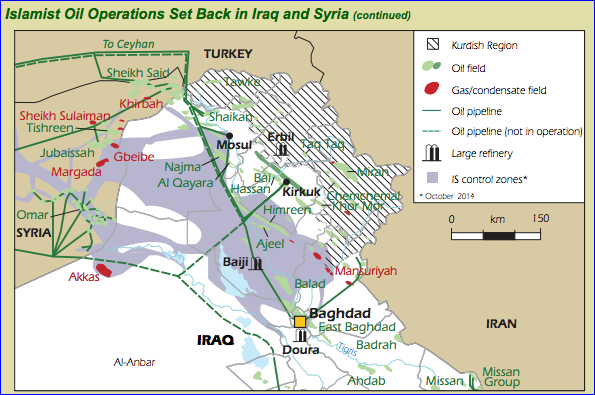
 Irak Şam İslam Devleti’nin (IŞİD) 2014 yılı içinde Irak’ta neden olduğu istikrarsızlık, Haziran ayı başlarında etkisini arttırmış ve 10 Haziran 2014 tarihinde Irak’ın en büyük ikinci şehri olan Musul’un IŞİD’in eline geçmesiyle doruk noktasına ulaşmıştır. IŞİD’in yarattığı bu kaos ortamı Irak’ta yüz binlerce sivilin evlerini, şehirlerini terk etmesine neden olmuştur. Irak’ta yaşanan bu insani drama komşu ülke Türkiye sessiz kalmamış hatta ilk yanıt veren ülke olmuştur. Türkiye tarafından yapılan insani yardımlar ırk, din, dil farkı gözetilmeksizin yerlerinden edilen bütün Iraklılara gönderilmiştir. Bu noktada Irak’taki Türkmenlere de Türkiye’den bazı yardımlar gitmiştir. Bu değerlendirmede IŞİD’in Irak’ta 2014 yılının başından beri yapmış olduğu operasyonlara ve bu operasyonlar sonucu Iraklı Türkmenlerin ülke içindeki göçlerine değinilecektir. Bu göçler sonrası Türkiye’nin bölgeye ve Türkmenlere yapmış olduğu insani yardımlar anlatılmaya çalışılacaktır. Son olarak yaşanan bu insani krize müdahale noktasında göçmenlerin de ihtiyaçları göz önünde bulundurularak, yapılan yardımların dışında hangi hususlara önem verilmesi konusunda öneriler sunulacaktır.