jeudi 28 février 2013

PKK leader’s letter to Kandil reaches northern Iraq: Report


PKK leader’s letter to Kandil reaches northern Iraq: Report

ISTANBUL - Hürriyet Daily News

This photo captured from Pukmedia shows the BDP’s co-chair Selahattin Demirtaş, Ahmet Türk and Aysel Tuğluk.
A Peace and Democracy Party (BDP) group arrived in Sulaymaniyah in northern Iraq today to deliver a letter from Abdullah Öcalan, the jailed leader of the outlawed Kurdistan Workers’ Party (PKK), which is addressed to Kandil, the military headquarters of the PKK, daily Hürriyet reported, quoting the Pukmedia website.


Hürriyet said the group arrived in Sulaymaniyah at 4 a.m. and that the letter would be send to Kandil later in the day.

The co-chairs of the Kurdish-umbrella organization, the Democratic Society Congress (DTK), Ahmet Türk and Aysel Tuğluk, were also in the group along with BDP’s co-chairs Selahattin Demirtaş and Gültan Kışanak, as well as BDP deputies Sırrı Süreyya Önder and Altan Tan, the report said. 

Patriotic Union of Kurdistan (PUK) officials welcomed the group, it said. 

Pukmedya published photos of the group in Sulaymaniyah. 

BDP deputy parliamentary group chair Pervin Buldan, Önder and Tan visited Öcalan at İmralı Prison on Feb. 23 as part of the ongoing efforts to find a peaceful solution to the Kurdish issue.

Öcalan had send letters to the BDP, the PKK and the organization’s European branch. 

Road map to be released at Nevruz: Report


Meanwhile, daily Milliyet, claimed today that the jailed leader of the outlawed Kurdistan Workers’ Party (PKK), Abdullah Öcalan has said he would declare a “road map for peace” on March 21, expressing confidence in the ongoing talks to solve the Kurdish issue in a peaceful way. 

Milliyet claimed to base its coverage on “official prison records” of talks between him and the Feb. 23 mission. 

“If the process fails, ‘Apo [Abdullah Öcalan] died,’ you will say. I will not be there, I will not let the BDP and the PKK use me,” Öcalan said, according to the report. 

“But everyone should know that we will neither live nor fight as we used to. I have trust in myself. You should know well that neither I nor the state will take a step back. [We will achieve] a historic peace and transition to democratic life,” he reportedly said.

“The PKK’s withdrawal from Turkey will be after a Parliament ruling and the Turkish Grand Assembly will approve it, a truth commission will be established. [Kurdish people who were exiled from their villages] will return to their villages. If these conditions are not met, the [PKK’s] withdrawal will not become real,” Milliyet quoted Öcalan as saying.

‘We will be free’

Öcalan also explained the political environment he expects after the “establishment of peace.”

“Neither house arrest nor amnesty, there will be no need for those. We will all be free. If I can be successful, neither the KCK [outlawed Kurdistan Communities Union – the PKK’s so-called urban wing] arrestees nor the others... A civil war will begin with 50,000 people. But everybody has to acknowledge we will not live as we used to or we will not fight as we used to,” Öcalan said.

Öcalan also made comments about “a team” that convinced Turkish Prime Minister Recep Tayyip Erdoğan “to end the PKK.” 

“[That team] said ‘we will end the PKK.’ They arrested tens of thousands of people [inKCK operations]. This power planned a coup against MİT [Turkish intelligence agency]. I intervened and said ‘it is a coup.’
 
The prime minister realized that it was his turn after a coup was staged against MİT. He was going to be arrested for treason,” he said.

Öcalan also reportedly lent his support to the presidential system, saying he would support “Erdoğan being president” on the condition of a system similar to that in the United States.

‘War could occur’


Öcalan began the talks by saying it was a historic meeting and that he had been holding talks since the period of former Turkish President Turgut Özal.

“Turks must acknowledge this. If [the peace process] fails, a middle-to-high-profile war will occur, and chaos and rebels will appear; I have been in contact [with authorities] since Özal and this was interrupted; now it must not be so,” he said.

Öcalan offered three phases and 10 principles in the meeting and told the deputies to “argue on them.”

 “You will argue on it, frankly. You will take it to Kandil [Mountain, where the PKK base is located] and to Europe. If it comes back in two weeks I will revise my views. It would be better for me to meet with [the BDP’s] co-chairs. If [the government’s] attitude toward the chairs continues, again this committee will gather. I want to declare this at Nevruz. I, myself will declare it,” Öcalan said.

March 21, the date of Nevruz, is a spring festival for many people in the Middle East and one of crucial importance to Kurds.

Öcalan also said the U.S. state of Florida was a hub for Turkish counter-guerillas who sabotaged anything related to a solution on the Kurdish issue. 

‘Morsi a British invention’

Öcalan asked the visiting deputies to work to prevent the pollution of Islam. 

“The British used Islam and knocked down the Ottomans. [Egyptian President Mohamed] Morsi is their new invention. They used to produce generals, today they are producing imams,” he reportedly said. 

The PKK leader was quoted as saying that he himself used to practice Islam and that Kurds were living their own Islam secretly. 

Blaming Israeli lobby, Armenians, Greeks

The Armenian lobby is bidding to become effective as of 2015, the 100th anniversary of the events of 1915, Milliyet reported him as saying.

“Kurds are trying to a secure a place for themselves. They were expelled from the state during the last century. Even [Ottoman sultan] Abdülhamid give them room. [Modern Turkish founder] Mustafa Kemal also gave it. The Israeli lobby, the Armenians and Greeks [living in Turkey], which step in, think that they will be successful if the Kurds are alienated,” he reportedly said.
February/28/2013

mercredi 27 février 2013

Iraq's shia Turkmen continue to be targeted


Iraq's Turkmen demand their own defence force


Turkmen shia continue to be targeted by fanatic salafists.


Official Flag of the Turkic Council


This is the official Flag of the Turkic Council 
which was adopted in Bishkek in 2012


Azerbaycan, Kazakistan, Kırgızistan ve Türkiye`nin oluşturduğu Türk Dili Konuşan Ülkeler İşbirliği Konseyi (Türk Konseyi) bayrağı kabul edildi.


Türkiye Cumhuriyeti Dışişleri Bakanı Ahmet Davutoğlu da bayrağın kabulünü Türk Konseyi'nin kurumsallaşması adına yeni bir adım olarak değerlendirdi. Davutoğlu, "Bu bayrak, Türkçe konuşan halkları daha da yakınlaştıracak." dedi.


lundi 25 février 2013

The Nexus Of Turkey’s Energy And Foreign Policy With Iraqi Kurdish Oil: The Iranian Connection


Türkiye’nin Enerji ve Dış Politikasının Irak Kürt Petrolü ile İlişkisi: 
İran Bağlantısı
Emre İŞERİ & Oğuz DİLEK


Abstract
In the post-American Iraqi energy conundrum,
Turkey’s foreign policy and energy strategy have
diverged. Ankara’s energy interest is vested in the
Kurdish north on the one hand, whereas due to
its own Kurdish question and geopolitical competition
with Iran, its conventional foreign policy
favors a powerful center in Baghdad on the other.
To further complicate matters, the Al-Maliki led
Shiite Baghdad government’s “omnibalancing”
among various stake holders from domestic
(Shiites, Sunnis, Kurds) and international (Iran, the
US, Turkey) domains, has placed restrictions on
Turkey’s options. In this light, this paper argues
that Turkey’s conventional foreign policy concerning
.Iraq is unsustainable, and thus should be revised in a
way that conforms to its energy strategy.

Please see:


http://www.orsam.org.tr/en/enUploads/Article/Files/2013222_emreiserioguzdilek.pdf

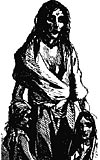
In 1847 during the Great Famine and Death in Ireland relief came only from the Ottoman Empire

http://www.ireland-family.net/english/drogheda.htm


DROGHEDA


IN 1847 DURING THE GREAT FAMINE AND DEATH - IN
IRELAND THE UNIQUE HUMANITARIAN RELIEF CAME
ONLY FROM THE EMPEROR AND PEOPLE OF TURKEY-
FOR MY EMERALD FAMILY.


During the great starvation; - in Ireland 1846-1851
the death of 1,5 million people and children the sole
humanitarian relief; came only from the Emperor of
Turkey (Ottoman Empire)


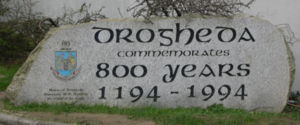
Drogheda/Ireland


Drogheda/Ireland commemorates 800 years 1194-1994


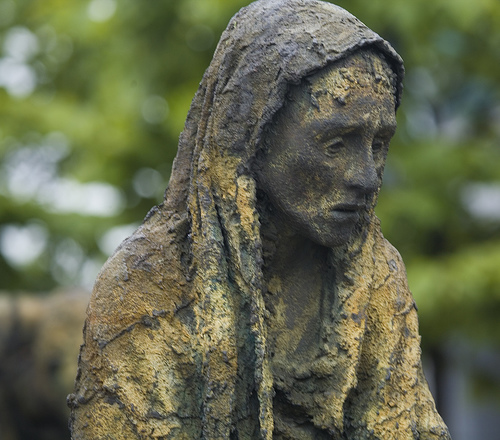
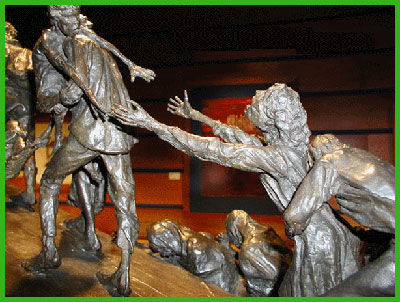
Photo: In Drogheda/Ireland the museum of starvation
and death in Ireland during the years 1847 - 1854


MASSACRE OF TURKMENS IN NORTHERN IRAQ


Bombing at a Funeral in Northern Iraq Kills at Least 35

Ako Rasheed/Reuters
A man wounded by a suicide bomber in Tuz Khurmato district in northern Iraq was treated at a hospital in Kirkuk.
BAGHDAD, Iraq — A crowded tent full of Turkmen mourners in northern Iraq was transformed into a mass killing ground on Wednesday by a suicide bombing that left at least 35 people dead and 117 wounded, regional officials and tribal leaders said, calling it a genocidal attack meant to further stoke the already-inflamed sectarian tensions in the country.

Both the dead and wounded victims included a number of high-ranking regional dignitaries, military officers, professors and religious men among the Turkmen population of the Tuz Khurmato district in Salahuddin Province, an area in the Kurdish north also claimed by Arabs and Turkmens. It came a day after an extended outbreak of sectarian shootings and bombings in the country that killed at least 24 Iraqis.
Mourners at the Imam Ali mosque had been paying their respects to a Turkmen employee of the Ministry of Health who had been killed in the mayhem the day before, the brother-in-law of a deputy in the Iraqi Turkmen Front, a political party. They had packed into a funeral tent for the ceremony when the suicide bomber, apparently masquerading as one of the aggrieved, blew himself up.
Turkmen leaders were outraged.
“We demand to have international forces to secure us, for the Turkmens and our areas,” said Faid Alla, the head of a Turkmen tribe. “We are being targeted, and our existence in Iraq is very dangerous, and we are under genocide. The central government is doing nothing for us.”
Tuz Khurmato, south of Kirkuk in an oil-rich area, was the site two months ago of a sectarian-tinged confrontation over disputed territory between forces loyal to the Iraqi government in Baghdad and the Kurdish regional government, which has its own armed forces.
Iraq has been increasingly consumed by sectarian attacks and political turmoil since December, when the home of the country’s Sunni finance minister was raided by security forces loyal to Prime Minister Nuri Kamal al-Maliki, a Shiite. Mr. Maliki’s political bloc has been accused by Sunnis and others of seeking to monopolize power before provincial elections this spring.
Mr. Maliki, who took power during the American-led military occupation of Iraq, has denied the accusations and rejected demands by rivals that he resign.
The instability has been a growing source of concern for the United States, which withdrew its military forces from Iraq about a year ago.

dimanche 24 février 2013

Iraqi High Commission of Human Rights - Statement regarding the recent attack on Iraqi Turkmens


Iraqi High Commission of Human Rights 

Statement regarding the recent attack on Iraqi Turkmens 


IHCHR is monitoring closely with huge concern, the systematic terrorist attack to one important component of Iraq and that is the Turkmen community.

It's clear that the Turkmens have been subjected to terrorism, bombing, kidnappings and assassinations, which violates their rights and their security; confirmed by the international treatment that is signed by Iraq and the Iraqi constitution in Art. 15.

And we take as an example the terrorist attack which took place on Wednesday 23/1/2013 in Tuzkhormato on unarmed citizens, killing 42 Turkmens and injuring more than 92 others.

And for this issue the IHCHR request the following:

- The official organizations to take the necessary actions to provide security and protection for all Iraqi citizens generally and the Turkmen especially because they have been targeted on a large scale and more than one time in recent events.

- The investigation organizations to show the results of their investigations in these accidents that targets the Iraqi people and to show the murderers of these operations to the public to take their fair punishments for the terrorist operations they carried out.

- The governmental organizations to reveal the quick indemnity of the martyrs and injured people and their families and the people whom have been affected in their way of life.

We also demand the legislative power to quickly issue decisions of protecting the Iraqi people especially the Turkmen Community.

At the end we condemn the shedding all Iraqi blood and assaults on the general or private property and we ask God to inspire patience to the martyrs' families and to heal the wounded.

Iraqi High Commission of Human Rights

Wednesday 30/1/2013

vendredi 22 février 2013

Barzani Plans to Host Summit As Iraqi Political Crisis Worsens


Iraqi Kurdish Region President Massoud Barzani (R) welcomes Iraqi Shiite cleric Muqtada al-Sadr at Erbil's airport, about 220 miles north of Baghdad, April 26, 2012. (photo by REUTERS/Azad Lashkari)


By: Bushra Al Mudhafar for Al-Monitor Iraq Pulse. Posted on February 21.

It seems that a prospective national meeting of political parties in Erbil, the capital of the Iraqi Kurdistan Region, is imminent. But questions remain as to whether such a meeting can solve Iraq's increasingly complicated problems.

About This Article

Summary :
Kurdistan Region President Massoud Barzani plans to host a summit of Iraq's political leaders as the country's political crisis worsens, writes Bushra Al Mudhafar.
Original Title:
Partisan Tensions Rise Ahead of Erbil Negotiations
Author: Bushra Al Mudhafar Translated by: Naria Tanoukhi
Categories : Originals  Iraq  
There are reports of US pressure and Iranian and Arab support for a second meeting among Iraqi factions under the auspices of Kurdistan Region President Massoud Barzani. Erbil hosted a similar meeting in 2010 with some success: it resulted in what is known as the "Erbil Agreement" that led to the formation of a national unity government, headed by Prime Minister Nouri al-Maliki.
According to Kurdish leaders in Iraq, Barzani is expected to send formal invitations within two weeks to leaders of Iraqi political parties for a comprehensive national conference in Erbil. The conference would discuss the repercussions of the anti-government protests taking place across Iraqi cities, which have increased sectarian tensions across the country.
The announcement of Barzani’s national-meeting initiative was preceded by the visit of a delegation from the National Iraqi Alliance — which includes the main Shiite parties — to the Kurdistan region, where they met with Kurdish leaders. Sources revealed that the Shiite delegation proposed an initiative that included comprehensive reforms.
The visit coincided with another meeting held by Barzani among Ayad Allawi, leader of the Iraqi List, which is supported by the Iraqi Sunnis; Ahmed Chalabi, president of the Iraqi National Congress; and a representative of the “Sadrist current” led by Shiite cleric Muqtada al-Sadr. The parties discussed the crisis and its repercussions.

The prospective "national meeting" would theoretically require concessions by opposing parties to solve the crisis. But it appears that each party is trying to improve its position in advance of sitting down at the negotiating table.
The Kurds, represented by the Kurdish Alliance, stipulated that the prospective conference must incorporate guarantees that conference decisions would be implemented. The goal is to prevent a repeat of what happened in Erbil in 2010; from the Kurdish Alliance's perspective, the Iraqi prime minister failed to implement most of the elements of the decisions that were issued.

According to the Kurds, commitment to agreements made at the conference will be the benchmark for success. Opposition political parties have accused the prime minister of evading the implementation of agreements, particularly with regard to national partnership.

The Erbil Agreement agreed on establishing a "strategic policies council" and national balance at state institutions; developing rules of procedure for the Council of Ministers; enacting laws pertaining to oil and gas, the Supreme Federal Court and the General Amnesty Law; assigning the position of minister of defense to the Iraqi List; solving the problems of detainees; participating in the management of the state in a way that would preserve all components and factions of the Iraqi people; and other issues that would help to rectify the political process.